We Don’t Need More SEL Programs. We Need Better Teaching

Updated: 21 hours ago
The SEL outcomes schools value most—confidence, motivation, belonging, and resilience—are byproducts of effective teaching, not programs teachers must add to their already full plates.
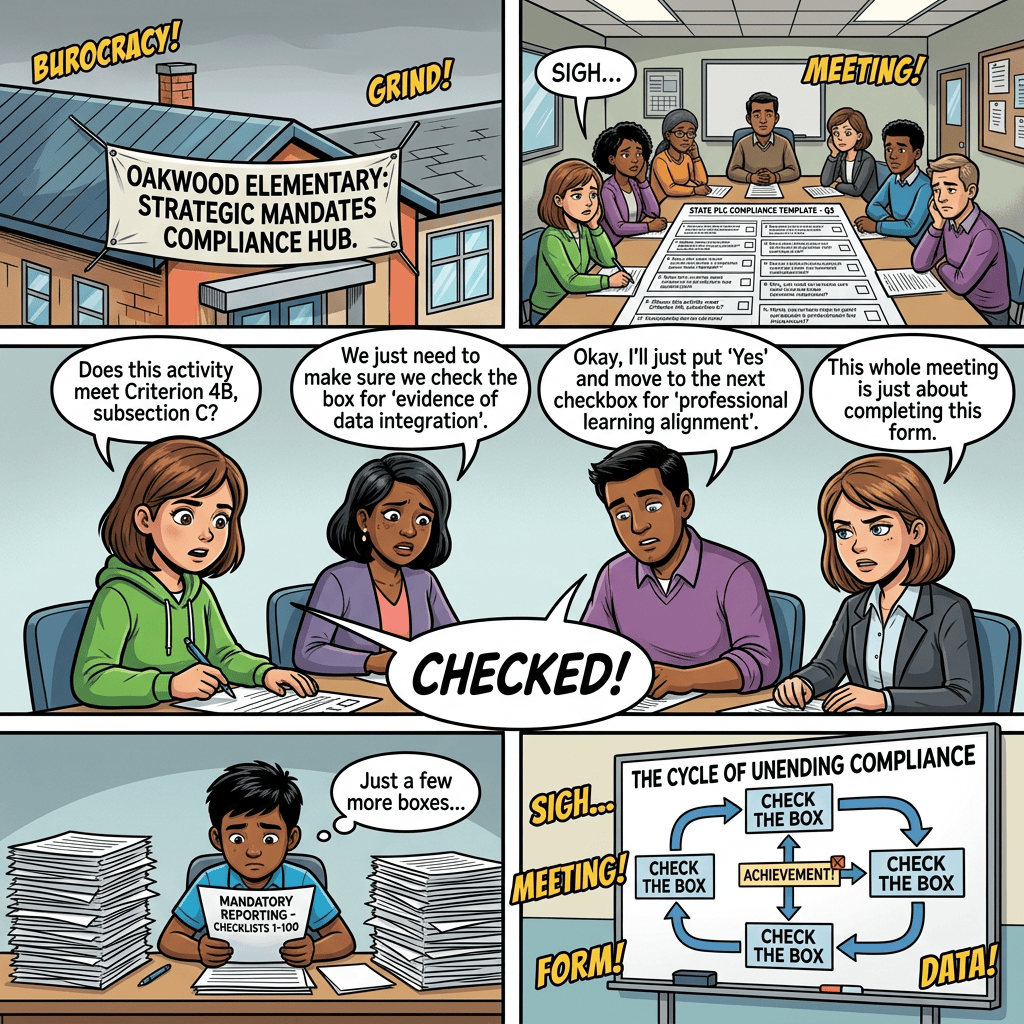
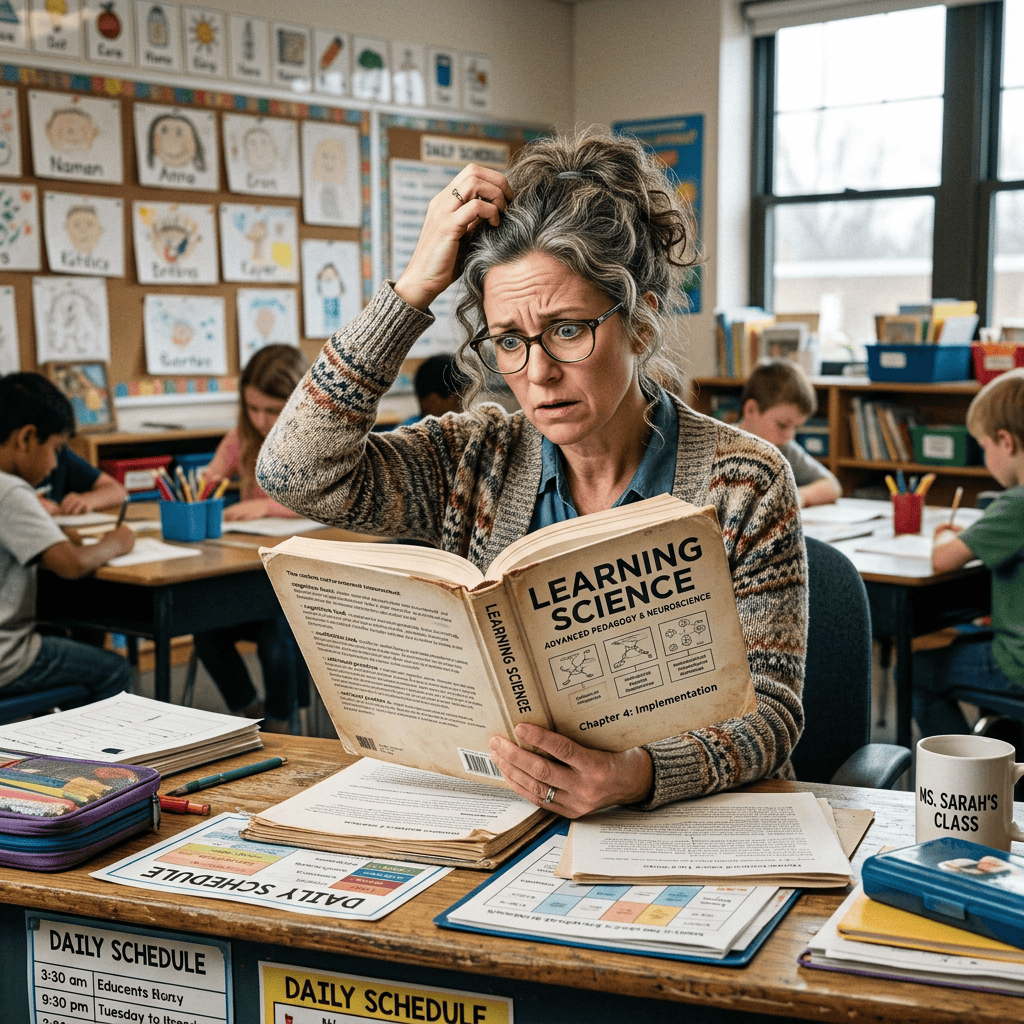
In recent years, school districts have sought new ways to support what they call the “whole child,” expanding their focus beyond academics to include social-emotional competencies like self-awareness, emotional regulation, perspective-taking, relationship skills, and responsible decision-making. Historically, these lessons were delivered by counselors or school-based specialists—psychologists, social workers, and behavioral interventionists. Today, however, most SEL frameworks explicitly call for these competencies to be embedded into daily classroom instruction, effectively shifting the work to general education teachers. Educators have long worn many hats, but the expectation that they now serve as academic expert, relationship coach, emotional-regulation guide, and cultural navigator, stretches the role in ways few anticipated.
The financial stakes are considerable. One research firm estimates the U.S. SEL market at $846.8 million in 2023, while another places the global market at $1.3 billionin 2022, with projections exceeding$5 billion by 2029. Districts pour time and money into programs, trainings, curricula, and software designed to cultivate these skills.
But what if many of the gains SEL programs promise could be achieved—not through costly add-ons—but through the everyday, well-structured instructional practices that effective teachers already use?
Classroom Structure & Clear Expectations
Research consistently shows that classrooms with clear structure and well-defined expectations reduce student stress and increase their sense of safety and belonging. CASEL—the field’s most influential SEL framework—explicitly notes that consistent routines create predictability, lower anxiety, and support learning, particularly for students who have experienced trauma or behavioral challenges. Predictability and structured environments also free up working memory, allowing students to focus on learning rather than deciphering what they are supposed to be doing—a cognitive and emotional safety net.
A recent meta-analysis led by Korpershoek on classroom management found that strategies such as clear rules, routines, proactive guidance, and relationship-building produced small but significant positive effects not only on academic and behavioral outcomes but also on students’ social-emotional and motivational functioning. When teachers organize classrooms with clarity and fairness, students don’t just comply more readily—they feel more competent, less anxious, and more capable. Structure doesn’t suppress students; it strengthens their sense of security and willingness to engage.
Teacher Clarity & Explicit Modeling: Self-Efficacy & Motivation
A growing body of research shows that instructional clarity—articulating clear goals, defining success criteria, and modeling tasks through worked examples—has powerful motivational and SEL-adjacent effects. Recent studies on clarity demonstrate that when students understand exactly what they’re aiming for, both their expectancies for success and the value they assign to the task increase. This, in turn, strengthens key components of motivation.
When students have a concrete picture of what success looks like, they experience greater self-efficacy and a stronger sense of agency: they feel more in control of their learning and more willing to take academic risks. Clear, explicit modeling doesn’t only improve achievement; it reshapes students’ internal narratives. It tells them, “I know what to do. I can do this.” In this way, clarity functions as one of the most powerful—yet often overlooked—drivers of student well-being.
The Power of Authoritative Teaching & SEL Outcomes
The authoritative—or “warm demander”—teaching stance, which combines high expectations with warmth and consistency, is strongly associated with improved social-emotional outcomes for students. Research shows that classrooms led by teachers who provide both structure and support yield better academic performance and stronger social-emotional development than those led by either permissive or authoritarian educators, the latter demanding compliance without the warmth and support that make structure effective.
Recent studies even connect classroom-level authoritative teaching to lower rates of bullying perpetration and victimization, suggesting that firm, fair structure paired with genuine care shapes not only individual behavior but the broader social climate. Students in these classrooms experience clearer norms, more respectful peer interactions, and a stronger sense of justice and safety. The teachers who are clearest and most consistent—while still deeply caring—are the ones whose students thrive.
School Belonging: How High Expectations & Clarity Support SEL
A large meta-analysis on school belonging shows that students’ sense of belonging is strongly associated with higher motivation, stronger social-emotional functioning, and fewer behavior problems. Guidance from REL Midwest and others highlights that maintaining high expectations, communicating them clearly, making learning relevant, and building rapport within fair, predictable environments are key drivers of belonging.
Importantly, these conditions are created not through isolated SEL lessons but through the everyday work of instructional design and classroom management. Belonging grows when students understand what is expected of them, feel supported in meeting those expectations, and experience classrooms that are consistent and just. In other words, one of the most powerful SEL outcomes schools aim for—belonging—is cultivated in the regular rhythms of teaching, not in pull-out SEL circles once a week.
What The Research Says About SEL Programs
A widely cited 2011 meta-analysis of 213 school-based SEL programs (K–12) found meaningful improvements in students’ social-emotional skills, attitudes, behavior, and an average 11-percentile-point gain in achievement. Yet the same body of research, along with subsequent syntheses, also makes clear that SEL is most effective when it is integrated into daily academic instruction and the broader classroom climate—not delivered as isolated lessons. SEL works best when it lives in the routines, expectations, and interactions that define classroom life.
As with many initiatives in education, the sticking point for most SEL programs is transfer. Students seldom apply emotional-regulation strategies taught in scripted lessons to challenging academic tasks, peer conflict, frustration with difficult work, or the fear of being wrong publicly. But when SEL competencies are embedded into the architecture of instruction—through teacher clarity, explicit modeling, predictable routines, and feedback loops—transfer becomes far more natural. Students use these skills not because they completed an SEL worksheet, but because the learning environment continually prompts, supports, and reinforces them.
Always Chasing the Latest Trend
Education is perpetually eager to evolve—and just as eager to chase the next big solution that promises to transform student outcomes. Curriculum publishers, software companies, and ed-tech providers know this well. In the years following COVID, spending on SEL programs exploded as schools looked for a way to repair the emotional and academic gaps students carried back into classrooms. But what if the fix we keep searching for doesn’t come from a packaged curriculum at all? What if the foundation of strong social-emotional development is not a program teachers must add to their already full plates, but a set of instructional practices they should have been supported to master from the start?
The truth is, the SEL outcomes schools value most—confidence, motivation, belonging, and resilience—are byproducts of effective, consistent, clearly structured teaching. They emerge when teachers communicate high expectations, model thinking explicitly, create predictable routines, and build classrooms where students feel competent and safe to take risks. Instead of investing millions in the next trend, we could invest in helping teachers do these core practices exceptionally well: provide professional learning on instructional clarity, strengthen coaching around modeling and routine-building, and support teachers in creating fair, predictable classroom environments. SEL does not have to be something teachers “add.” In the hands of skilled educators, it is something they embody every time they teach.
References
Durlak, J. A., Weissberg, R. P., Dymnicki, A. B., Taylor, R. D., & Schellinger, K. B. (2011). The impact of enhancing students’ social and emotional learning: a meta-analysis of school-based universal interventions. Child development, 82(1), 405–432. https://doi.org/10.1111/j.1467-8624.2010.01564.x
Grand View Research. (2024). U.S. social and emotional learning (SEL) market size & outlook. https://www.grandviewresearch.com/horizon/outlook/social-and-emotional-learning-sel-market/united-states
Korpershoek, H., Harms, T., de Boer, H., van Kuijk, M., Doolaard, S. (2016). A meta-analysis of the effects of classroom management strategies and classroom management programs on students’ academic, behavioral, emotional, and emotional outcomes. Review of Educational Research, 86(3), 643-680. https://doi.org/10.3102/0034654315626799
Lieber, C.M., Tissiere, M., Bialek, S. (2019). Embedding social and emotional learning in high school classrooms. Collaborative for Academic, Social, and Emotional Learning (CASEL) (White paper). https://schoolguide.casel.org/uploads/sites/2/2025/01/White-paper-Embedding-Social-and-Emotional-Learning-in-High-Schools-Classrooms.pdf

Comments